



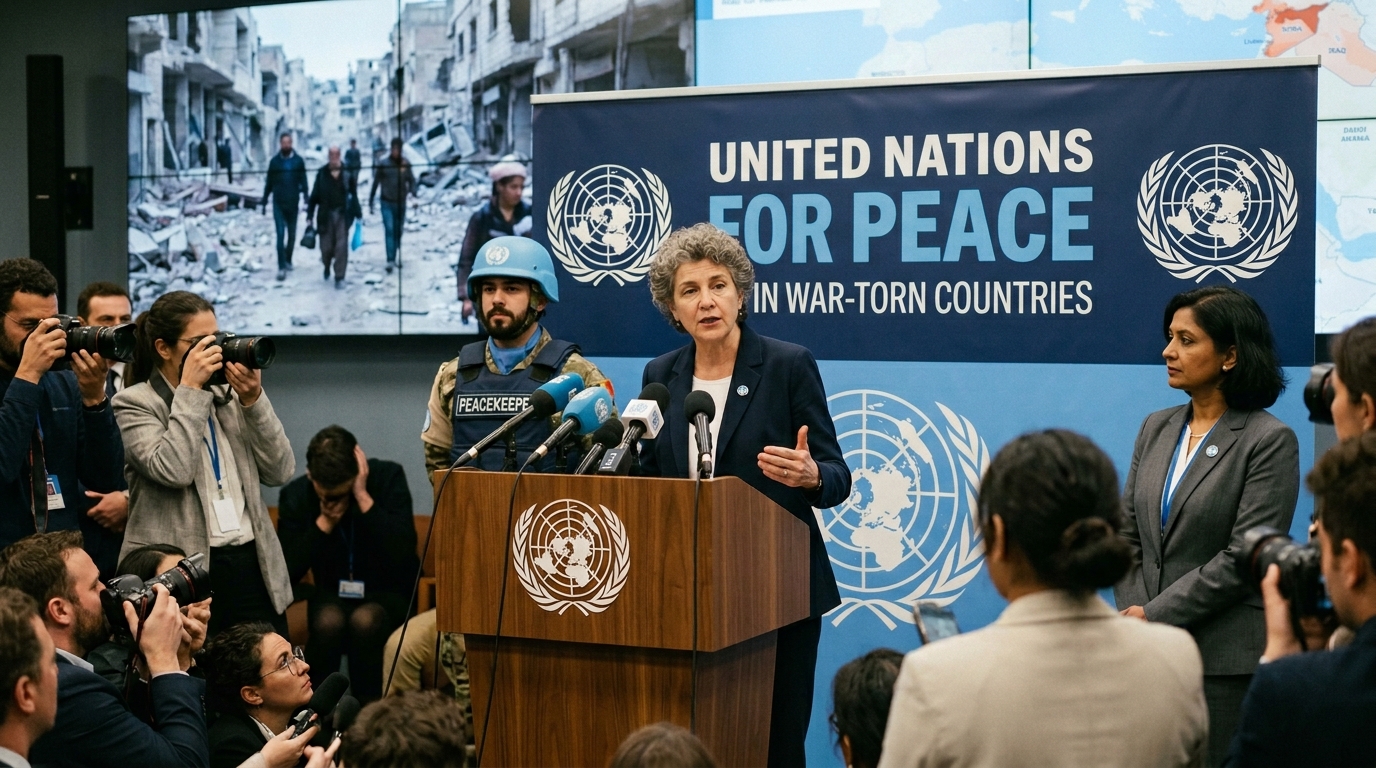
In response to escalating conflicts across multiple regions, the United Nations has renewed its global appeal for peace in war-torn countries. The call emphasizes immediate ceasefires, humanitarian access, and renewed diplomatic negotiations to reduce civilian suffering. This renewed push reflects growing international concern over displacement, instability, and long-term geopolitical consequences affecting global security and development.
UN Peacekeeping and Conflict Resolution Framework
Diplomatic Mediation Efforts
Diplomatic mediation efforts led by the United Nations focus on bringing conflicting parties to negotiation tables to achieve peaceful settlements. These efforts prioritize dialogue over military escalation, encouraging compromise, rebuilding trust, and establishing structured frameworks for long-term political stability in regions affected by ongoing armed conflicts worldwide today.
Ceasefire Agreement Monitoring
Ceasefire agreement monitoring ensures that conflicting parties adhere to temporary or permanent cessation of hostilities. UN observers track compliance, report violations, and support enforcement mechanisms, helping reduce violence, protect civilians, and create conditions necessary for sustained peace negotiations and humanitarian relief operations in fragile regions globally.
Peacekeeping Mission Deployment
Peacekeeping mission deployment involves sending international forces under UN mandate to conflict zones to maintain order and protect civilians. These missions provide security support, assist local authorities, and help stabilize regions while political solutions are negotiated, ensuring reduced violence and improved safety for affected populations worldwide today.
Conflict De Escalation Strategies
Conflict de escalation strategies focus on reducing tensions between warring groups through dialogue facilitation, confidence building measures, and neutral mediation. These strategies aim to prevent further violence, encourage cooperation, and create pathways toward peaceful resolution while minimizing civilian casualties and infrastructure destruction in affected regions globally.
Humanitarian Coordination Support
Humanitarian coordination support ensures that relief agencies operate effectively in conflict zones by organizing aid distribution, securing access routes, and coordinating with local authorities. These efforts help deliver food, medical supplies, and shelter to vulnerable populations while maintaining neutrality and efficiency in crisis response operations worldwide.
Humanitarian Crisis and Civilian Protection
Refugee Assistance Programs
Refugee assistance programs provide essential support to individuals forced to flee conflict zones. These programs offer shelter, food, medical care, and legal protection, helping displaced populations rebuild their lives while ensuring international obligations toward human rights and dignity are upheld in crisis affected regions globally today.
Emergency Food Distribution
Emergency food distribution systems deliver critical nutrition to populations facing starvation or food insecurity due to war. Coordinated by humanitarian organizations, these systems ensure timely supply of essential goods, reduce malnutrition risks, and stabilize vulnerable communities affected by prolonged conflict and disrupted supply chains worldwide.
Medical Aid Deployment
Medical aid deployment focuses on providing urgent healthcare services in war-torn regions through mobile clinics, field hospitals, and emergency medical teams. These efforts address injuries, disease outbreaks, and lack of healthcare infrastructure, ensuring survival and recovery for affected civilians in unstable environments globally today.
Shelter and Housing Relief
Shelter and housing relief programs provide temporary accommodation for displaced families affected by conflict. These initiatives include refugee camps, temporary housing units, and reconstruction assistance, ensuring safety, dignity, and stability while long-term peacebuilding and rebuilding efforts are implemented in devastated regions worldwide today.
Child Protection Initiatives
Child protection initiatives focus on safeguarding children affected by armed conflict from violence, exploitation, and displacement. These programs provide education, psychological support, and safe environments, ensuring vulnerable children receive care and opportunities despite the challenges of living in war-affected regions across the world today.
Diplomatic Negotiations for Peace
International Peace Talks
International peace talks bring together conflicting parties under UN facilitation to negotiate ceasefires and long-term settlements. These talks emphasize dialogue, compromise, and mutual understanding, aiming to resolve disputes peacefully while preventing further escalation and promoting regional and global stability across conflict affected areas worldwide today.
Conflict Resolution Frameworks
Conflict resolution frameworks provide structured approaches to addressing political and territorial disputes through negotiation, mediation, and legal mechanisms. These frameworks aim to reduce hostility, establish agreements, and promote sustainable peace while ensuring accountability and fairness in resolving international conflicts across affected regions globally.
Neutral Mediator Roles
Neutral mediator roles involve third party facilitators assisting in peace negotiations without bias toward any party. The United Nations and affiliated organizations play key roles in bridging communication gaps, reducing mistrust, and guiding conflicting parties toward mutually acceptable solutions in ongoing global conflicts today.
Treaty Development Processes
Treaty development processes involve drafting formal agreements that define peace terms, territorial arrangements, and post conflict responsibilities. These treaties are critical for establishing long term stability, ensuring compliance, and providing legal frameworks that support peaceful coexistence between previously opposing nations or groups globally.
Diplomatic Sanctions Adjustments
Diplomatic sanctions adjustments are used as tools to encourage compliance with peace initiatives. These adjustments may include easing or tightening economic and political restrictions depending on progress in negotiations, helping incentivize peaceful behavior while maintaining international pressure for conflict resolution across global crisis regions.
Role of International Organizations
United Nations Peacekeeping Operations
United Nations peacekeeping operations deploy international personnel to maintain stability in conflict zones. These operations protect civilians, support ceasefires, and assist in rebuilding governance structures, ensuring a controlled environment for political dialogue and reducing violence in regions experiencing armed conflict worldwide today.
Human Rights Monitoring Agencies
Human rights monitoring agencies track violations in war zones and report abuses to the international community. These organizations ensure accountability, document evidence, and advocate for justice, helping protect civilians and strengthen international pressure for peaceful resolution of conflicts across affected regions globally.
Global Security Councils
Global security councils evaluate threats to international peace and recommend actions such as sanctions or peacekeeping missions. These councils play a vital role in maintaining global stability, coordinating responses to conflicts, and ensuring collective decision making among member states during crises worldwide today.
Regional Cooperation Bodies
Regional cooperation bodies support peace efforts by facilitating dialogue between neighboring countries affected by conflict. These organizations help manage cross border tensions, coordinate humanitarian aid, and promote regional stability through diplomatic engagement and shared security strategies in vulnerable geopolitical areas globally.
International Court Mechanisms
International court mechanisms address war crimes and violations of international law through legal proceedings. These courts ensure accountability for perpetrators, deliver justice for victims, and reinforce global legal standards aimed at preventing future conflicts and promoting long term peace and stability worldwide.
Ceasefire and Peacebuilding Efforts
Temporary Truce Agreements
Temporary truce agreements establish short term pauses in hostilities to allow humanitarian aid delivery and negotiation opportunities. These agreements reduce immediate violence, save lives, and create conditions necessary for more comprehensive peace negotiations between conflicting parties in war affected regions globally today.
Demilitarization Programs
Demilitarization programs focus on reducing military presence and disarming combatants in post conflict areas. These initiatives support peacebuilding by removing weapons, reintegrating fighters into society, and preventing renewed violence while promoting long term stability and reconciliation in affected regions worldwide.
Reintegration of Combatants
Reintegration of combatants involves helping former fighters transition back into civilian life through education, employment, and psychological support. These programs reduce the risk of relapse into violence and contribute to long term peace and social stability in post conflict societies globally today.
Community Rebuilding Initiatives
Community rebuilding initiatives restore infrastructure, schools, and healthcare systems damaged by conflict. These efforts strengthen social cohesion, support economic recovery, and create conditions for sustainable peace by addressing the root causes of instability in war affected regions across the world.
Post Conflict Recovery Plans
Post conflict recovery plans provide structured frameworks for rebuilding governance, economy, and social systems after war. These plans focus on long term development, reconciliation, and institutional reform to ensure lasting peace and prevent the recurrence of violence in fragile regions globally.
Global Security and Stability Challenges
Rising Geopolitical Tensions
Rising geopolitical tensions contribute to ongoing conflicts and hinder peace efforts by increasing mistrust between nations. These tensions often involve territorial disputes, political disagreements, and economic competition, making diplomatic resolution more complex and challenging for international peacekeeping organizations worldwide today.
Arms Proliferation Issues
Arms proliferation issues worsen conflicts by increasing the availability of weapons in unstable regions. This escalation leads to prolonged violence, higher civilian casualties, and greater difficulty in achieving ceasefires, requiring strict international controls and enforcement mechanisms to reduce global security risks.
Terrorism and Insurgency Risks
Terrorism and insurgency risks complicate peace efforts by creating unstable environments where governments struggle to maintain control. These threats undermine peace processes, increase civilian suffering, and require coordinated international responses to restore stability and prevent further escalation in conflict zones globally.
Economic Instability Effects
Economic instability effects in war-torn regions exacerbate poverty, unemployment, and resource scarcity, fueling further conflict. Lack of economic opportunity increases vulnerability to violence, making economic recovery and development essential components of sustainable peacebuilding strategies in affected regions worldwide today.
Cyber Warfare Threats
Cyber warfare threats are emerging challenges that disrupt communication systems, infrastructure, and security networks during conflicts. These digital attacks complicate peacekeeping efforts and require advanced technological defenses and international cooperation to protect critical systems and maintain global stability.
Future of Global Peacebuilding
Strengthening Multilateral Cooperation
Strengthening multilateral cooperation involves enhancing collaboration between nations, organizations, and institutions to address conflicts collectively. This approach improves coordination, resource sharing, and diplomatic effectiveness, ensuring more efficient and unified responses to global peace and security challenges worldwide today.
Peace Education Programs
Peace education programs promote understanding, tolerance, and conflict resolution skills among communities. These initiatives aim to reduce violence, encourage dialogue, and build cultures of peace, helping future generations avoid conflict and contribute to long term global stability and cooperation.
Technology in Peace Monitoring
Technology in peace monitoring uses satellite imagery, data analytics, and artificial intelligence to track conflict zones and ceasefire violations. These tools enhance transparency, improve response times, and support evidence based decision making in international peacekeeping operations worldwide today.
Sustainable Development Integration
Sustainable development integration links peacebuilding efforts with economic growth, education, and environmental protection. This holistic approach addresses root causes of conflict and promotes long term stability by improving living standards and reducing inequality in fragile and post conflict regions globally.
Global Conflict Prevention Systems
Global conflict prevention systems focus on early warning mechanisms, diplomatic engagement, and rapid response strategies to prevent escalation. These systems aim to identify risks early, intervene effectively, and maintain international peace and security through coordinated global efforts and institutional frameworks worldwide.
Why is the UN involved in conflicts
The UN intervenes to promote peace, protect civilians, and facilitate diplomatic negotiations in war affected regions.
How does UN peacekeeping work
Peacekeeping missions monitor ceasefires, support stability, and assist in rebuilding post conflict societies.
What challenges do war-torn countries face
They face poverty, displacement, infrastructure damage, and ongoing security instability.
How are refugees supported in conflicts
They receive shelter, food, medical aid, and international humanitarian assistance.
Can diplomacy end wars completely
Diplomacy can resolve conflicts but requires cooperation, trust, and long term commitment.
The United Nations call for peace highlights the urgent need for global cooperation to end conflicts and protect civilians. Through diplomacy, peacekeeping, and humanitarian support, the international community aims to stabilize war-torn regions. Continued collaboration, strong institutions, and sustained dialogue will remain essential for achieving lasting peace, rebuilding societies, and ensuring global security for future generations worldwide.
