



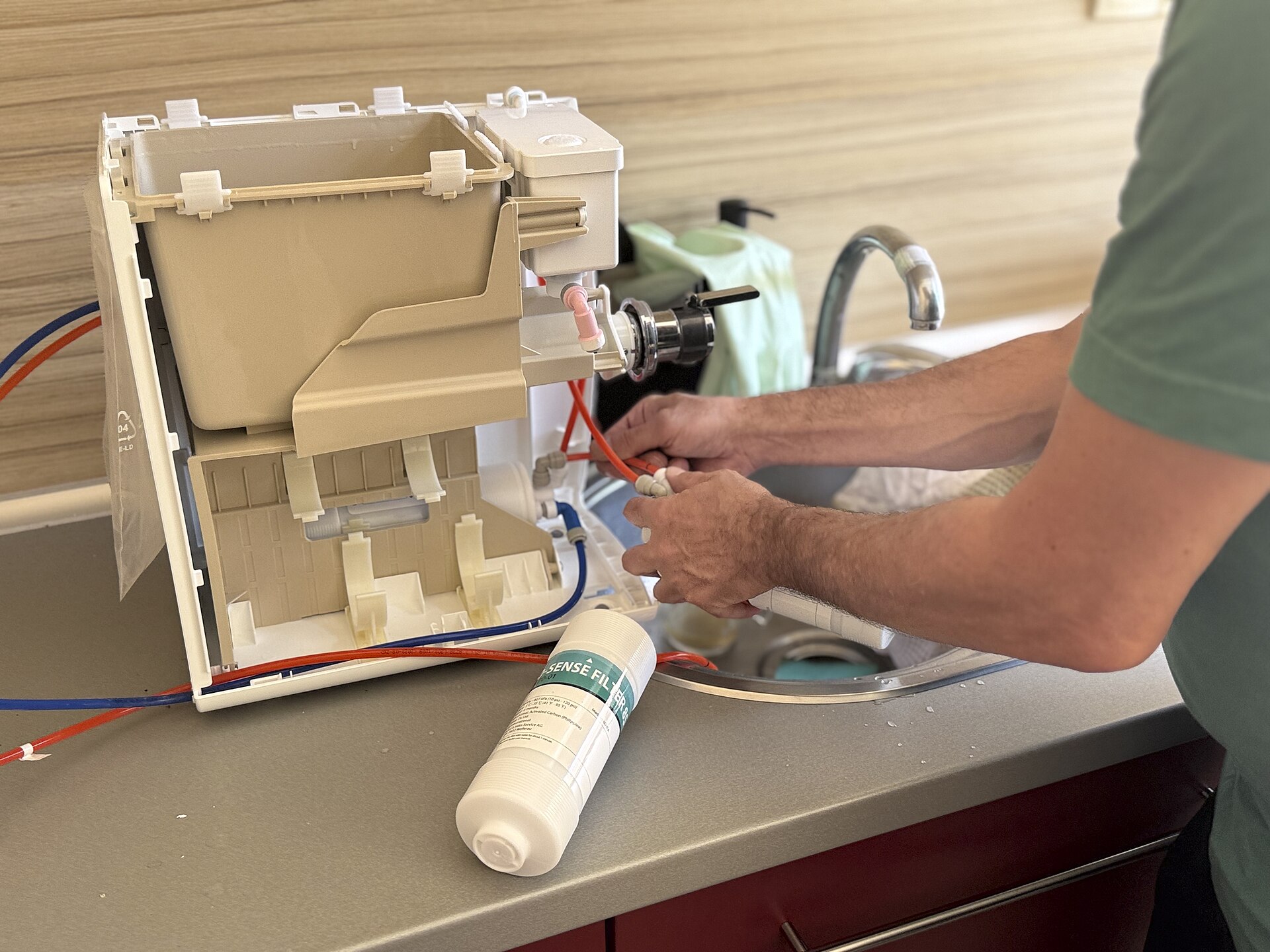
The toaster is dead, the zip is stuck, the lamp flickers — and instead of the bin, they are going to the repair café. What began in Amsterdam in 2011 as one journalist’s experiment has grown into a worldwide network of thousands of volunteer-run sessions where neighbours fix each other’s belongings for free, over coffee, and teach the skills as they go.
The model is disarmingly simple. A community venue, a few tables, a rota of volunteers who can solder, sew, sharpen and diagnose. Visitors bring broken items and — this is the crucial design choice — stay to participate in the fix rather than dropping the item off. The repair café is not a free repair shop; it is a skills-transfer session that happens to produce working toasters. Organisers estimate roughly two-thirds of brought items leave repaired, and nearly all of the rest leave with a diagnosis.
From Fringe to Policy
The movement’s timing proved impeccable. Right-to-repair legislation has swept from campaign slogan to statute book: the EU now requires manufacturers of major appliances to supply spare parts for a decade and is extending repairability scoring to phones and tablets; several US states have passed repair laws; France pays a repair bonus at the till for electronics and clothing. Coverage of the shift, from the BBC to trade press, treats repair cafés as the cultural proof that made the politics possible — visible evidence that people want repair to be normal.
Manufacturers are adapting in both directions. Some now publish service manuals and sell parts to independents; others still glue batteries and pair components to block third-party fixes, and the regulatory fight over those practices continues. Meanwhile a professional repair sector is quietly expanding into the space the cafés mapped: high-street fix-it shops, refurbishment platforms, brand-run repair programmes.
More Than Toasters
Ask regulars why they come and the answer is rarely only the toaster. Repair cafés function as third places — neither home nor work — where competence is shared across generations and the retired engineer is a local celebrity. Environmental accounting adds weight: every repaired item defers a replacement’s manufacturing footprint, and the network’s collective logs run to millions of items kept in service. As our sustainability coverage notes, repair is the circular economy’s least glamorous and most honest chapter: it happens one kettle at a time.
The skills pipeline is the movement’s quiet succession question. The founding generation of repair volunteers skews retired and technical; the cafés that thrive are the ones deliberately apprenticing younger fixers, pairing the teenager who can jailbreak a phone with the pensioner who can rewind a motor. Schools have noticed: repair clubs and “fix-it” modules are appearing in design-and-technology curricula, teaching diagnostics — the lost art of working out what is actually wrong — as a first-class skill. That may be the movement’s longest legacy: not the millions of items fixed, but a generation for whom taking something apart to understand it feels normal again.
Manufacturers’ own data hints at the stakes: a substantial share of products returned as faulty under warranty have nothing wrong with them beyond a clogged filter, a flat battery or a setting. A repair culture catches those cases before they become waste, cost and resentment — one more reason the movement’s supporters include a surprising number of the industry’s own engineers.
The Bottom Line
The repair café did not set out to change manufacturing law, consumer culture and the social life of towns simultaneously. It did so by making a simple proposition tangible: broken is not the same as finished. That proposition now has legislation behind it and a generation growing up assuming things can be fixed — the same collective, low-cost, high-evidence pattern behind the community choir boom, explored in our look at singing as a health intervention.
