



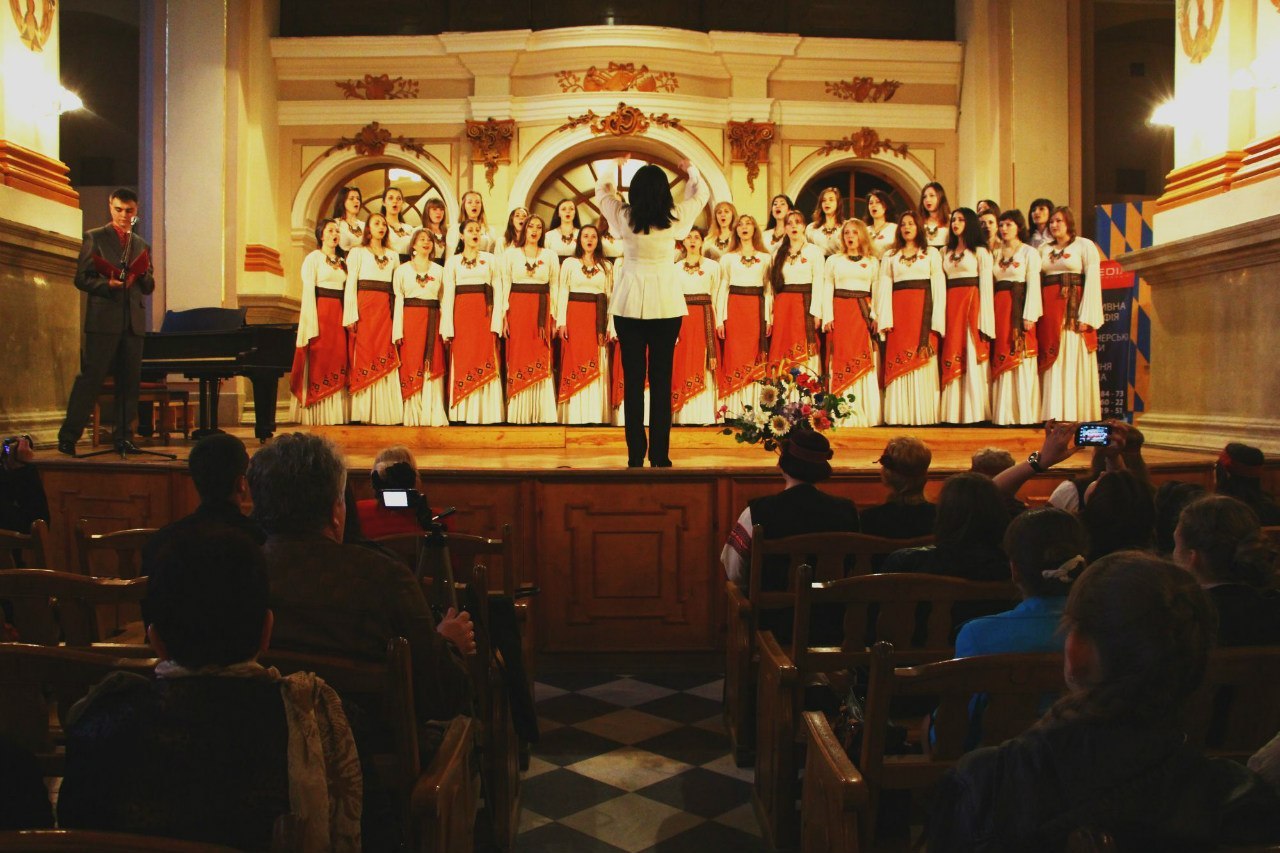
Every week, in church halls and community centres, an unlikely public-health intervention takes place: the community choir. No audition, no solo, no special equipment — just people standing close together and singing. And a growing body of research suggests that this simple arrangement delivers measurable benefits: improved mood, better breathing, stronger social bonds, even pain tolerance.
The evidence is unusually concrete for a feel-good activity. Studies measuring singers before and after rehearsals find drops in cortisol (the stress hormone) and rises in antibodies linked to immune function. Group singing synchronises breathing and heart rates — literally, participants’ cardiovascular rhythms converge as they breathe together. Researchers reviewed in journals of the World Health Organization‘s arts-and-health initiative describe community singing as one of the best-evidenced arts interventions available, which is why “social prescribing” — doctors referring isolated or anxious patients to community groups — so often ends at the choir stalls.
Why Singing, Specifically
Part of the effect is mechanical. Singing is controlled breathing: long exhalations, diaphragmatic engagement, sustained posture. Patients with chronic lung conditions in “singing for breathing” programmes show improved symptom control and confidence in managing breathlessness. Part is chemical: group singing elevates endorphins and oxytocin more than equivalent solo singing, according to comparative studies — the social bond is an ingredient, not a by-product.
And part is social architecture. A choir is a rare institution that is intergenerational, cross-class and low-cost, with a weekly rhythm and a shared goal that ends in performance. For newcomers to a town, retirees, or anyone whose week lacks a fixed point of friendly contact, it functions as community infrastructure disguised as a hobby — a point our community coverage makes often about institutions like these.
The Loneliness Prescription
Loneliness is now treated as a health risk comparable to smoking, which reframes the humble choir as targeted medicine. Evaluations of social-prescribing programmes find that referrals to singing groups show among the highest adherence of any intervention — people keep going, which is more than can be said for most health advice. Choirs are also reaching into specific needs: singing groups for people with Parkinson’s (voice and breathing), dementia carers and patients together, new mothers (postnatal singing groups show striking effects on postnatal depression symptoms in trials).
The research agenda is now catching up with the practice. Funders are backing larger trials with proper control groups — comparing singing against other group activities to separate the music from the mere meeting — and following participants for years rather than weeks. Early results suggest singing outperforms on respiratory and mood measures, while choirs and other groups tie on loneliness: the gathering matters most, the singing adds its own layer. There is also work on who benefits most. The largest effects appear in people who arrive with the least: the recently bereaved, new parents, those living with chronic conditions — which is why health services increasingly treat a choir place as a clinical referral rather than a lifestyle tip.
Choir leaders, for their part, are increasingly trained for the role the evidence assigns them — spotting the isolated newcomer, pacing for mixed abilities, knowing when a singer’s troubles exceed a rehearsal’s remedy. The best community choirs are quietly professional about inclusion while feeling entirely amateur in the room, which is precisely the combination the research says works.
The Bottom Line
None of this requires believing in magic. A choir is exercise for the lungs, a schedule for the week, a machine for making friends, and a small weekly experience of collective competence — finishing a hard piece together feels like something because it is something. In an age of expensive wellbeing, it may be the best value in the entire catalogue: roughly the cost of the hall hire, divided by forty. The same do-it-together energy drives another community revival, the repair café, examined in our report on the return of fixing things together.

1 Comment
Pingback: Repair Cafés and the Return of Fix-It Culture - NewsCharm