



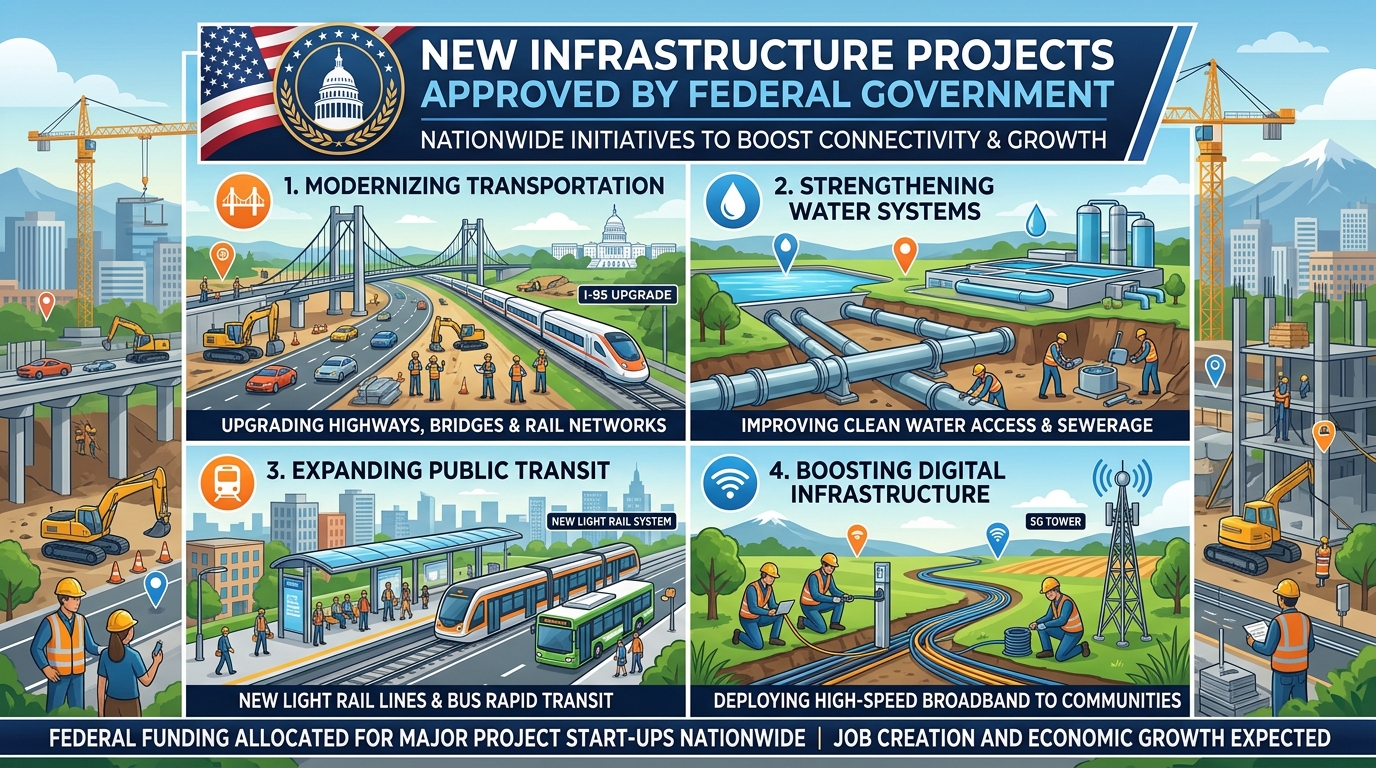
Public infrastructure development has taken a fresh turn as the federal government approves a new wave of large-scale projects aimed at improving connectivity, economic growth, and public services. These initiatives focus on transportation, energy, urban development, and digital systems, reflecting a long-term strategy to strengthen national productivity and regional integration.
National Infrastructure Planning Framework
Strategic Development Prioritization
Strategic development prioritization ensures that infrastructure projects are selected based on economic impact, population needs, and regional balance. Governments evaluate long-term benefits, cost efficiency, and sustainability before approval, allowing resources to be allocated to projects that maximize national growth and improve public welfare outcomes.
Budget Allocation Planning Systems
Budget allocation planning systems determine how financial resources are distributed across infrastructure sectors. These systems balance funding between transport, energy, and urban projects while ensuring fiscal responsibility. Careful allocation helps prevent overspending, supports timely completion, and maintains stability in national development programs.
Project Feasibility Assessments
Project feasibility assessments evaluate technical, environmental, and economic viability before approval. These assessments identify risks, estimate costs, and measure expected benefits. By filtering impractical proposals early, governments ensure that only sustainable and high-impact infrastructure projects move forward for execution.
Interdepartmental Coordination Mechanisms
Interdepartmental coordination mechanisms bring together various government departments to streamline infrastructure planning. Collaboration between transport, finance, and environmental agencies reduces delays, improves decision-making, and ensures that projects align with national development goals and regulatory standards effectively.
Public Investment Monitoring Systems
Public investment monitoring systems track progress, spending, and performance of infrastructure projects. These systems enhance transparency, reduce corruption risks, and ensure accountability. Continuous monitoring helps governments identify delays early and maintain efficiency throughout project implementation cycles.
Transportation Infrastructure Expansion
Highway Network Development
Highway network development focuses on expanding road connectivity between major cities and rural areas. Improved highways reduce travel time, enhance trade movement, and support economic integration. These projects also improve logistics efficiency and strengthen national transportation systems for long-term growth.
Railway Modernization Projects
Railway modernization projects upgrade existing rail systems with faster trains, improved safety, and better signaling technology. These improvements increase passenger capacity, reduce transportation costs, and promote environmentally friendly travel while strengthening national freight and logistics networks.
Urban Transit System Upgrades
Urban transit system upgrades improve metro, bus, and rapid transit services in major cities. These enhancements reduce traffic congestion, improve air quality, and provide affordable transportation options, making urban mobility more efficient and accessible for growing populations.
Airport Expansion Initiatives
Airport expansion initiatives increase passenger handling capacity, improve runway infrastructure, and enhance international connectivity. These projects support tourism, trade, and foreign investment while modernizing aviation facilities to meet global transportation standards and rising travel demand.
Port Infrastructure Enhancement
Port infrastructure enhancement improves cargo handling capacity, storage facilities, and shipping efficiency. Upgraded ports support international trade, reduce logistics costs, and strengthen export-import operations, making the country more competitive in global maritime commerce.
Energy and Power Development Projects
Renewable Energy Expansion Plans
Renewable energy expansion plans focus on increasing solar, wind, and hydroelectric power generation. These projects reduce dependence on fossil fuels, lower emissions, and promote sustainable energy systems that support long-term environmental and economic stability.
National Grid Modernization
National grid modernization improves electricity transmission systems with smart technologies and upgraded infrastructure. These improvements reduce power losses, enhance reliability, and support integration of renewable energy sources into the national power network efficiently.
Hydropower Development Projects
Hydropower development projects build and upgrade dams and water-based energy systems. These initiatives provide clean electricity, support water management, and contribute to energy security while promoting sustainable resource utilization across regions.
Rural Electrification Programs
Rural electrification programs expand electricity access to remote and underserved areas. These initiatives improve living standards, support education and healthcare services, and stimulate local economic development through reliable energy availability.
Energy Storage Systems Deployment
Energy storage systems deployment focuses on battery and grid storage solutions to stabilize energy supply. These systems ensure continuous electricity availability, support renewable integration, and improve overall efficiency of national power infrastructure.
Urban Development and Housing Projects
Smart City Development Initiatives
Smart city development initiatives integrate digital technologies into urban planning to improve governance, transportation, and public services. These projects enhance efficiency, reduce congestion, and create more sustainable and livable urban environments.
Affordable Housing Schemes
Affordable housing schemes aim to provide low-cost housing options for middle and low-income populations. These programs address urban housing shortages, improve living conditions, and promote social stability through accessible residential development.
Water Supply Infrastructure Projects
Water supply infrastructure projects improve access to clean drinking water through pipelines, treatment plants, and storage systems. These developments ensure public health, reduce water scarcity, and support sustainable urban growth.
Waste Management System Upgrades
Waste management system upgrades focus on improving collection, recycling, and disposal processes in cities. These initiatives reduce environmental pollution, enhance sanitation, and support cleaner and healthier urban living conditions.
Urban Road Network Improvements
Urban road network improvements expand and upgrade city roads to reduce traffic congestion and improve mobility. These projects enhance transportation efficiency and support economic activity in densely populated urban centers.
Digital and Communication Infrastructure
National Broadband Expansion
National broadband expansion projects increase internet access across urban and rural areas. These initiatives improve digital connectivity, support economic growth, and enable access to online education, healthcare, and business services.
5G Network Deployment
5G network deployment introduces high-speed mobile connectivity that enhances communication, digital services, and industrial automation. This technology supports innovation, improves connectivity, and strengthens the digital economy.
Data Center Development
Data center development projects build advanced facilities for secure data storage and processing. These centers support cloud computing, digital services, and government data management systems while strengthening cybersecurity infrastructure.
Digital Government Platforms
Digital government platforms improve public service delivery through online systems for documentation, payments, and information access. These platforms increase efficiency, reduce bureaucracy, and enhance transparency in governance.
Cybersecurity Infrastructure Strengthening
Cybersecurity infrastructure strengthening protects digital systems from cyber threats and data breaches. These measures ensure secure communication, safeguard sensitive information, and maintain trust in national digital infrastructure systems.
Economic and Industrial Infrastructure Growth
Industrial Zone Expansion
Industrial zone expansion projects develop dedicated areas for manufacturing and production facilities. These zones attract investment, create jobs, and improve industrial output, contributing to national economic growth.
Special Economic Zones Development
Special economic zones development provides tax incentives and infrastructure support to attract foreign and domestic investors. These zones boost exports, encourage innovation, and enhance industrial competitiveness.
Logistics and Supply Chain Hubs
Logistics and supply chain hubs improve storage, transportation, and distribution systems. These projects reduce operational costs, enhance trade efficiency, and strengthen national and international supply chain networks.
Export Processing Facilities
Export processing facilities support manufacturing and packaging industries focused on international trade. These developments improve export quality, increase production efficiency, and strengthen global market participation.
Business Park Infrastructure
Business park infrastructure development creates modern office spaces and commercial hubs. These projects attract corporate investment, support startups, and promote economic diversification in urban centers.
Environmental and Sustainability Projects
Climate Resilient Infrastructure
Climate resilient infrastructure projects design roads, buildings, and utilities that withstand extreme weather conditions. These initiatives reduce disaster risks and improve long-term sustainability of national assets.
Green Urban Spaces Development
Green urban spaces development focuses on parks, gardens, and ecological zones within cities. These projects improve air quality, enhance biodiversity, and promote healthier living environments.
Flood Protection Systems
Flood protection systems include dams, drainage networks, and barriers to prevent water damage. These infrastructure projects protect communities, reduce economic losses, and improve disaster preparedness.
Sustainable Construction Practices
Sustainable construction practices promote eco-friendly materials and energy-efficient building methods. These approaches reduce environmental impact and support long-term sustainability in infrastructure development.
Carbon Reduction Infrastructure Projects
Carbon reduction infrastructure projects aim to lower emissions through cleaner technologies and energy-efficient systems. These initiatives support national climate goals and promote environmental responsibility.
Future Infrastructure Strategy and Outlook
Long-Term National Development Vision
Long-term national development vision focuses on creating integrated infrastructure systems that support economic growth, sustainability, and social development. These plans ensure balanced regional progress and future readiness.
Public-Private Partnership Expansion
Public-private partnership expansion encourages collaboration between government and private investors. This model accelerates project completion, improves efficiency, and reduces financial burden on public resources.
Technology-Driven Infrastructure Planning
Technology-driven infrastructure planning uses AI, data analytics, and smart systems to design efficient projects. This approach improves accuracy, reduces costs, and enhances decision-making processes.
Infrastructure Financing Innovation
Infrastructure financing innovation introduces new funding models such as bonds, international loans, and investment funds. These methods ensure adequate capital for large-scale development projects.
Global Collaboration in Infrastructure Development
Global collaboration in infrastructure development strengthens partnerships with international organizations and countries. These collaborations bring expertise, funding, and technology to improve national infrastructure systems.
What are federal infrastructure projects
Federal infrastructure projects are large-scale developments funded and approved by the central government.
Why are infrastructure projects important
They improve transportation, energy, economy, and public services across the country.
How do infrastructure projects support economic growth
They create jobs, attract investment, and enhance productivity.
What sectors benefit most from infrastructure development
Transportation, energy, housing, and digital sectors benefit significantly.
What is future of infrastructure development
It will focus on smart, sustainable, and technology-driven systems.
New infrastructure approvals by the federal government reflect a strong push toward modernization and national development. These projects enhance connectivity, energy efficiency, and urban growth while supporting economic stability. With rising investment in technology, sustainability, and public-private partnerships, infrastructure development is set to transform living standards, strengthen industries, and build long-term national competitiveness across regions.
