



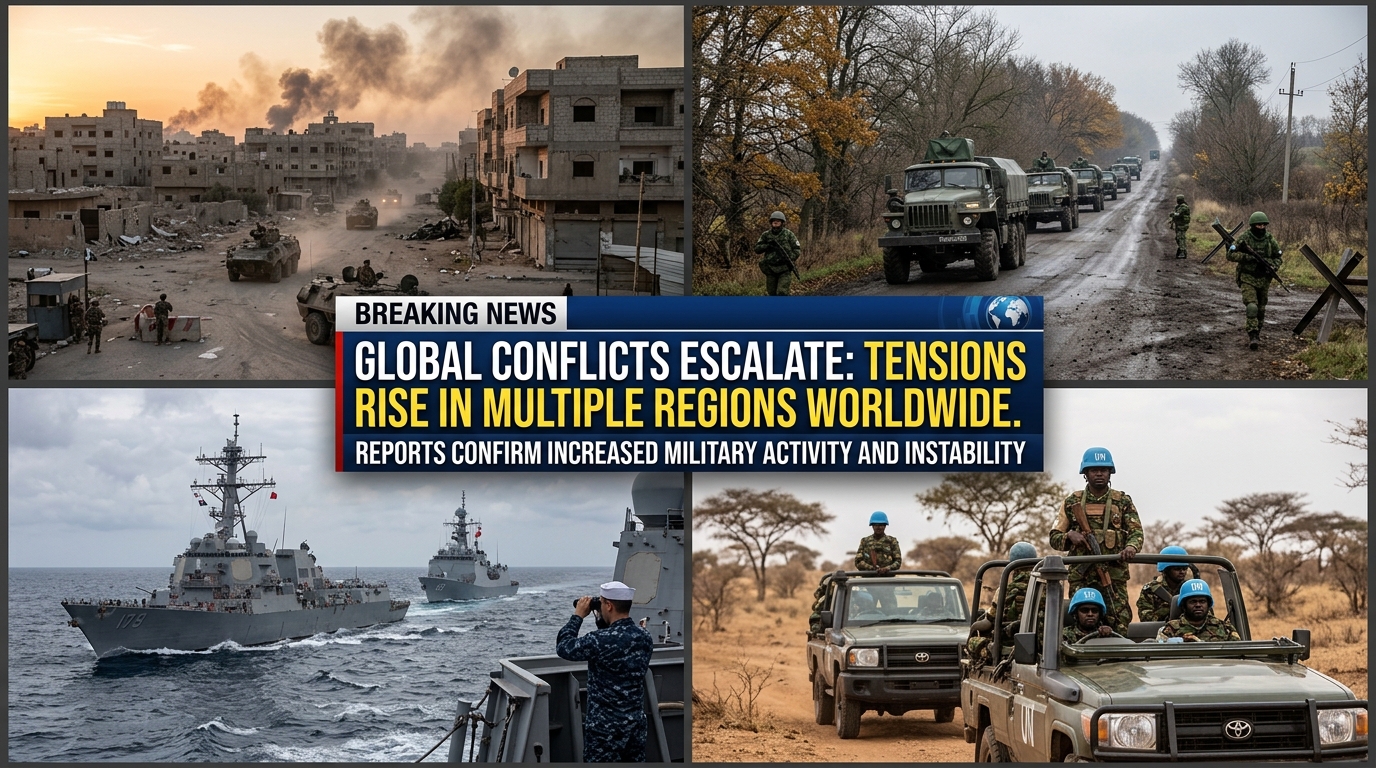
International tensions are rising across multiple regions as geopolitical rivalries, territorial disputes, and security concerns intensify. Governments are increasing military readiness, strengthening alliances, and engaging in diplomatic negotiations to manage crises. These escalating conflicts are reshaping global stability, affecting trade routes, energy markets, and humanitarian conditions while drawing attention from international organizations seeking peaceful resolutions.
Geopolitical Tensions and Regional Rivalries
Major Power Competition
Global power competition between leading nations is intensifying as countries seek influence over strategic regions, resources, and alliances. This rivalry is reflected in military modernization, economic sanctions, and diplomatic positioning, creating instability in multiple hotspots and increasing the risk of localized conflicts expanding into broader international confrontations today.
Territorial Dispute Escalation
Territorial disputes are escalating in several regions due to unresolved border claims and historical grievances. Nations are deploying military forces, increasing patrols, and reinforcing claims through legal and diplomatic channels. These disputes often heighten tensions between neighboring states and can trigger sudden clashes if negotiations fail or breakdown occurs unexpectedly in sensitive border zones worldwide today.
Regional Alliance Shifts
Shifting regional alliances are reshaping global diplomacy as countries realign based on security interests and economic partnerships. New defense agreements and strategic collaborations are emerging, while older alliances face strain. These changes contribute to uncertainty, as nations reassess their positions in response to evolving threats and geopolitical pressures across multiple continents and international systems today.
Proxy Conflict Expansion
Proxy conflicts are expanding as major powers support opposing sides in regional wars without direct confrontation. These indirect engagements increase violence, prolong instability, and complicate peace efforts. External funding, arms supplies, and political backing intensify local disputes, turning them into prolonged international struggles affecting civilian populations and regional security dynamics across multiple conflict zones today.
Diplomatic Breakdown Trends
Diplomatic breakdowns between nations are becoming more frequent due to mistrust, sanctions, and failed negotiations. Reduced communication channels increase the likelihood of miscalculations and unintended escalation. As diplomatic ties weaken, international mediation efforts face greater challenges in preventing conflicts and restoring dialogue between opposing parties in volatile regions experiencing rising tensions globally today.
Armed Conflicts and Military Escalation
Active War Zones Expansion
Active war zones are expanding in several regions where ongoing conflicts have intensified due to military offensives and counterattacks. Civilian populations are increasingly affected by displacement, infrastructure damage, and humanitarian crises. Escalating violence makes peace negotiations more difficult, while international observers warn of further destabilization if conflicts continue unchecked across affected territories worldwide today.
Military Build Up Trends
Military build up is increasing as nations deploy additional troops, advanced weaponry, and defense systems in response to perceived threats. This escalation raises concerns about accidental confrontations and arms races between rival states. Defense spending has surged in multiple regions, reflecting heightened insecurity and preparation for potential large scale conflicts in volatile geopolitical environments today globally.
Cross Border Clashes
Cross border clashes are occurring more frequently due to disputed territories and security tensions between neighboring countries. These incidents often involve military exchanges, border patrol confrontations, and retaliatory strikes. Such clashes heighten regional instability and increase the risk of broader escalation if diplomatic solutions are not implemented quickly and effectively by involved governments today.
Ceasefire Violations Increase
Ceasefire agreements in conflict zones are being violated more frequently, undermining peace efforts and prolonging violence. Accusations of breaches by opposing sides lead to renewed fighting and loss of trust in negotiation processes. These violations hinder humanitarian aid delivery and worsen conditions for civilians living in affected areas experiencing ongoing instability and insecurity today globally.
Urban Conflict Intensification
Urban conflict is intensifying in several regions where fighting has moved into densely populated cities. This creates severe humanitarian challenges including civilian casualties, infrastructure destruction, and displacement. Urban warfare complicates military operations and increases risks for non combatants, making conflict resolution more urgent for international peacekeeping organizations and diplomatic mediators worldwide today.
Economic Impact of Global Conflicts
Energy Market Disruptions
Energy markets are experiencing disruptions due to conflicts affecting oil producing regions and key transportation routes. Supply uncertainties lead to price volatility and increased global energy costs. These disruptions impact both developed and developing economies, forcing governments to seek alternative energy sources and stabilize supply chains amid ongoing geopolitical tensions today worldwide markets.
Trade Route Instability
Trade routes are becoming unstable as conflicts threaten maritime passages and land transportation corridors. Shipping delays, increased insurance costs, and rerouted logistics are affecting global commerce. Businesses face uncertainty in supply chains, while governments work to secure critical trade pathways essential for international economic stability and uninterrupted flow of goods across regions today globally.
Currency Market Volatility
Currency markets are experiencing volatility as investors react to geopolitical uncertainty and conflict escalation. Safe haven currencies gain strength while emerging market currencies face pressure. Financial instability increases as markets respond to news of military actions and diplomatic tensions, affecting global investment flows and economic confidence across interconnected financial systems worldwide today.
Global Inflation Pressures
Global inflation pressures are rising due to supply chain disruptions, energy price increases, and reduced trade efficiency caused by conflicts. These factors contribute to higher costs for goods and services, affecting household budgets and economic growth. Governments are implementing monetary policies to stabilize inflation while managing external geopolitical risks impacting economies globally today.
Investment Risk Reduction
Investment risk reduction strategies are being adopted by global markets as uncertainty increases due to international conflicts. Investors shift toward safer assets, reduce exposure to high risk regions, and diversify portfolios. This cautious approach affects capital flow into affected economies, slowing development projects and increasing financial caution across global investment landscapes today.
Humanitarian Crisis and Displacement
Refugee Flow Increase
Refugee flows are increasing as conflicts force civilians to flee affected regions seeking safety in neighboring countries. This creates pressure on host nations and international aid organizations. Humanitarian needs such as shelter, food, and medical care are rising sharply, requiring coordinated global responses to manage displacement crises effectively across multiple regions today.
Humanitarian Aid Challenges
Humanitarian aid delivery is facing challenges due to restricted access, security risks, and damaged infrastructure in conflict zones. Aid organizations struggle to reach vulnerable populations, delaying essential support. International agencies are calling for safe corridors and ceasefire agreements to ensure timely assistance reaches those affected by ongoing violence and instability today globally.
Civilian Infrastructure Damage
Civilian infrastructure is suffering extensive damage in conflict zones including hospitals, schools, and transportation systems. This destruction worsens living conditions and slows recovery efforts after violence subsides. Reconstruction costs are increasing, while long term development prospects are hindered by continued instability and recurring conflict in affected regions worldwide today humanitarian impact.
Food Security Concerns
Food security concerns are rising as conflicts disrupt agricultural production, supply chains, and market access. Populations in affected regions face shortages and rising food prices, increasing the risk of malnutrition. International organizations are working to provide emergency food assistance while addressing long term agricultural recovery challenges in conflict impacted areas globally today.
Medical System Strain
Medical systems in conflict zones are under severe strain due to increased casualties, infrastructure damage, and shortages of medical supplies. Healthcare workers face difficult conditions while treating patients in unsafe environments. International support is required to strengthen emergency medical response and restore healthcare services in regions affected by ongoing conflicts today globally.
Diplomatic Efforts and Peace Talks
International Mediation Efforts
International mediation efforts are underway to resolve conflicts through dialogue facilitated by global organizations and neutral countries. These initiatives aim to bring opposing parties to negotiation tables, reduce violence, and establish frameworks for lasting peace agreements across multiple regions experiencing escalating tensions and armed confrontations today globally diplomatic channels.
United Nations Involvement
United Nations involvement in conflict resolution includes peacekeeping missions, humanitarian aid coordination, and diplomatic negotiations. The organization works to stabilize regions, prevent escalation, and support peacebuilding efforts. Despite challenges, it remains a key platform for addressing international conflicts and promoting cooperation among member states affected by global instability today effectively.
Ceasefire Negotiations
Ceasefire negotiations are ongoing in several conflict zones as parties attempt to reduce violence and establish temporary peace agreements. These discussions focus on halting military operations, allowing humanitarian access, and building trust between opposing sides. However, sustaining long term agreements remains challenging due to deep rooted political and territorial disagreements globally today.
Regional Peace Initiatives
Regional peace initiatives are being launched by neighboring countries and organizations to address localized conflicts. These initiatives focus on dialogue, conflict prevention, and cooperative security frameworks. By involving regional stakeholders, these efforts aim to create sustainable peace solutions tailored to specific geopolitical contexts and cultural dynamics in affected areas worldwide today.
Conflict Resolution Frameworks
Conflict resolution frameworks are being developed to guide negotiations, peacebuilding, and post conflict reconstruction efforts. These frameworks include legal mechanisms, diplomatic strategies, and international cooperation models. Their goal is to ensure structured approaches to resolving disputes and preventing future escalations in regions affected by ongoing or emerging international conflicts today globally.
Technology and Modern Warfare Evolution
Drone Warfare Expansion
Drone warfare is expanding in modern conflicts as nations use unmanned aerial systems for surveillance, reconnaissance, and targeted strikes. This technology reduces risk to personnel but increases the speed and complexity of warfare. Its widespread use is reshaping military strategies and raising ethical concerns about autonomous combat operations in global conflict zones today.
Cyber Warfare Attacks
Cyber warfare attacks are becoming more frequent as state and non state actors target critical infrastructure, communication networks, and financial systems. These digital conflicts disrupt services and create new security challenges. Governments are investing heavily in cyber defense capabilities to protect national interests and maintain stability in an increasingly digital battlefield environment today globally.
Artificial Intelligence in Defense
Artificial intelligence is being integrated into defense systems for threat detection, strategic planning, and autonomous decision support. AI enhances military efficiency but raises concerns about accountability and escalation risks. Its growing role in modern warfare is transforming how conflicts are managed and how decisions are made in high pressure security environments today globally.
Satellite Surveillance Systems
Satellite surveillance systems provide real time intelligence on troop movements, infrastructure damage, and conflict developments. These systems enhance situational awareness for governments and military planners. However, increased surveillance capabilities also raise privacy and security concerns, as space based technologies become integral to modern geopolitical and military strategies worldwide today effectively.
Electronic Warfare Tactics
Electronic warfare tactics involve disrupting enemy communication systems, radar, and navigation technologies. These methods are increasingly used in modern conflicts to gain strategic advantage without direct confrontation. As technology advances, electronic warfare plays a critical role in shaping battlefield outcomes and influencing the direction of international military engagements today globally.
Global Security Alliances and Responses
NATO Strategic Adjustments
NATO strategic adjustments involve strengthening defense postures, increasing troop deployments, and enhancing collective security measures among member states. These changes respond to rising global tensions and evolving threats. The alliance focuses on deterrence, rapid response capabilities, and coordination to maintain stability in regions affected by escalating international conflicts today effectively globally.
Regional Defense Cooperation
Regional defense cooperation is expanding as countries collaborate on joint military exercises, intelligence sharing, and security planning. These partnerships aim to address shared threats and improve crisis response capabilities. Enhanced coordination strengthens regional stability and helps prevent conflicts from escalating into larger international confrontations across interconnected geopolitical landscapes today globally.
Arms Control Discussions
Arms control discussions are taking place to limit the spread of advanced weaponry and reduce the risk of escalation. Nations are negotiating treaties and agreements to regulate military capabilities. These efforts aim to promote stability, reduce tensions, and prevent an arms race that could further destabilize already volatile global regions today.
Peacekeeping Mission Expansion
Peacekeeping missions are being expanded in conflict affected areas to monitor ceasefires, protect civilians, and support humanitarian efforts. International forces work under global mandates to stabilize regions and assist in rebuilding efforts. Despite operational challenges, peacekeeping remains a key tool for managing international conflicts and reducing violence worldwide today effectively.
Global Security Coordination
Global security coordination involves collaboration among international organizations, governments, and defense agencies to address rising conflicts. This includes intelligence sharing, joint operations, and diplomatic engagement. Coordinated responses aim to prevent escalation, manage crises, and maintain international peace and stability in an increasingly complex geopolitical environment affected by ongoing conflicts today globally.
FAQs
What is causing international conflicts to escalate
Geopolitical rivalries, territorial disputes, and economic tensions are major causes of escalating international conflicts.
How do global conflicts affect the economy
They disrupt trade routes, increase inflation, and cause instability in energy and financial markets.
What role does diplomacy play in conflicts
Diplomacy helps reduce tensions, facilitate negotiations, and prevent further escalation of violence.
How is technology changing modern warfare
Technologies like drones, AI, and cyber tools are making warfare more advanced and complex.
What is the role of the United Nations in conflicts
The United Nations supports peacekeeping, mediation, and humanitarian assistance in conflict zones.
Conclusion
International conflicts are intensifying across multiple regions, driven by political rivalries, territorial disputes, and technological warfare. These tensions impact economies, humanitarian conditions, and global stability. While diplomatic efforts and peace initiatives continue, effective cooperation and conflict resolution remain essential. A balanced approach combining security measures and dialogue is crucial for maintaining long term global peace and stability worldwide today.
