



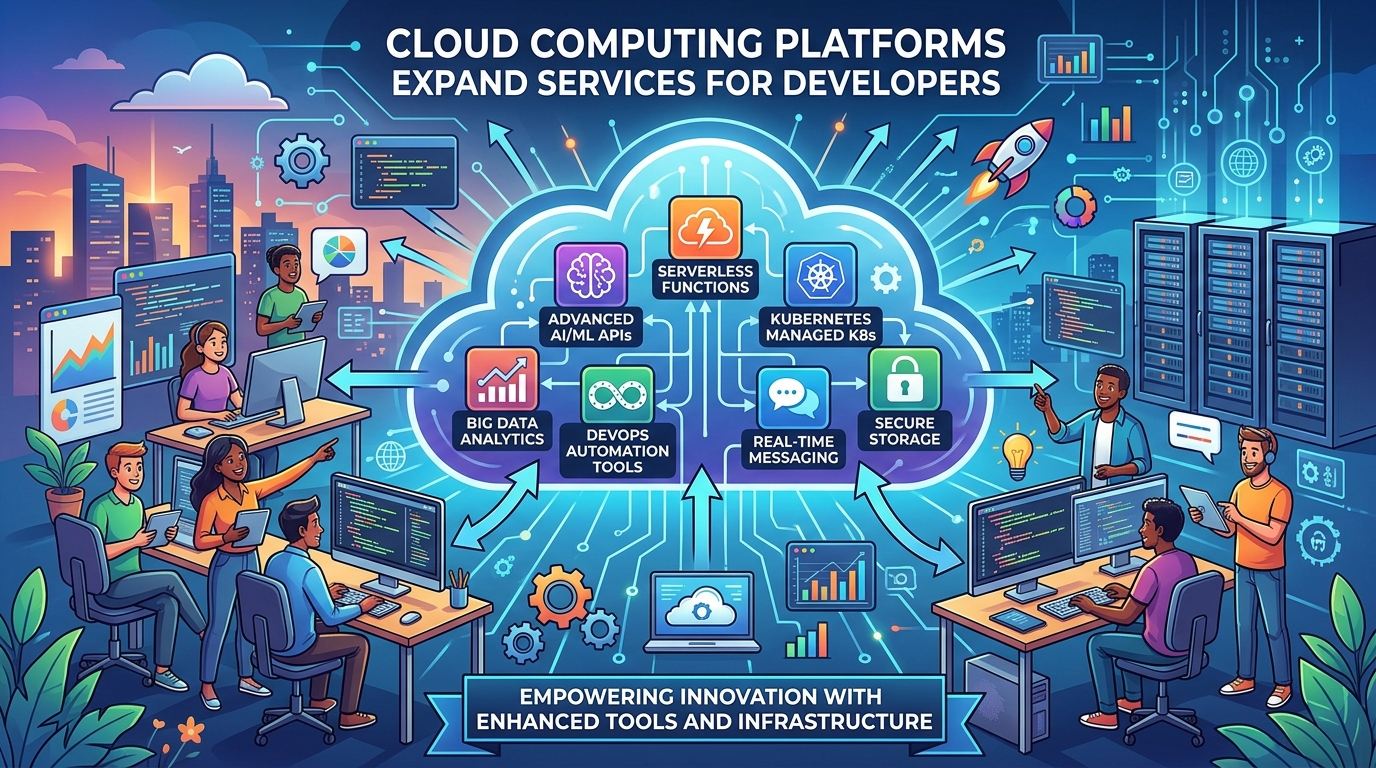
Cloud computing platforms are rapidly expanding their services to meet the growing demands of developers worldwide. From scalable infrastructure to advanced AI tools, these platforms are transforming how applications are built, deployed, and managed. Developers now benefit from faster workflows, improved collaboration, and powerful automation features that reduce complexity and increase productivity in modern software development environments.
Cloud Platform Evolution for Developers
Early Infrastructure Models
Early cloud infrastructure models focused on providing basic virtual machines and storage services to developers who needed scalable computing power without managing physical servers. These systems reduced hardware dependency and enabled faster deployments with flexibility, reliability, and cost efficiency for diverse projects at scale today
Virtualization Improvements
Virtualization improvements enabled cloud providers to run multiple operating systems on a single physical machine efficiently, increasing resource utilization and reducing operational costs for developers building complex applications across different environments. This advancement improved scalability, performance, and deployment consistency for global software teams significantly today
Cloud Accessibility Expansion
Cloud accessibility expansion allowed developers worldwide to access powerful computing resources through internet-based platforms without requiring expensive local infrastructure or technical maintenance responsibilities. This democratization of technology supported innovation, remote collaboration, and faster software development cycles for businesses and independent developers across industries worldwide today
Pay As You Go Models
Pay as you go pricing models transformed cloud computing by allowing developers to pay only for the resources they actually use, reducing upfront costs and enabling flexible budgeting for startups and enterprises. This model encouraged experimentation, innovation, and efficient resource allocation globally in modern cloud
Developer First Platforms
Developer first platforms prioritize tools, APIs, and environments designed specifically to enhance coding efficiency, collaboration, and deployment speed across cloud ecosystems. These platforms streamline workflows, reduce complexity, and provide integrated services that help developers build, test, and scale applications more effectively in competitive markets globally
Serverless Computing Growth
Event Driven Architecture
Event driven architecture enables serverless computing platforms to execute code in response to specific triggers such as user actions, database updates, or system events. This approach improves efficiency, reduces idle resource consumption, and allows developers to focus on application logic instead of infrastructure management tasks
Automatic Scaling Benefits
Automatic scaling benefits in serverless platforms allow applications to handle fluctuating workloads without manual intervention from developers or administrators. Resources are automatically allocated based on demand, ensuring optimal performance, reduced costs, and improved reliability for modern cloud applications across global user bases in real time
Cost Efficiency Advantages
Cost efficiency advantages of serverless computing reduce infrastructure expenses by charging only for execution time and consumed resources during application runtime. This model eliminates idle server costs, improves budgeting accuracy, and supports startups and enterprises in optimizing cloud spending effectively over time at scale globally
Function As A Service
Function as a service allows developers to deploy individual functions in the cloud without managing servers, infrastructure, or runtime environments directly. This model simplifies application development, increases scalability, and enables faster deployment cycles for modern software solutions across diverse industries and cloud ecosystems globally today
Serverless Ecosystem Integration
Serverless ecosystem integration connects various cloud services, APIs, and third party tools to enable seamless application development and deployment processes. This integration improves productivity, reduces operational complexity, and allows developers to build scalable applications using modular cloud components efficiently across distributed systems and platforms globally today
Containerization and Kubernetes Ecosystem
Container Technology Basics
Container technology packages applications and their dependencies into isolated units that run consistently across different computing environments, improving portability and reliability for developers. This approach reduces environment conflicts, simplifies deployment processes, and supports scalable cloud-native application development across multiple platforms and systems efficiently today globally
Kubernetes Orchestration Power
Kubernetes orchestration power enables automated deployment, scaling, and management of containerized applications across distributed cloud environments efficiently. It provides self healing capabilities, load balancing, and resource optimization, allowing developers to maintain high availability and performance for large scale applications globally today in modern cloud systems
Microservices Architecture
Microservices architecture breaks applications into small independent services that can be developed, deployed, and scaled separately within cloud environments. This structure enhances flexibility, improves fault isolation, and enables continuous delivery practices for developers building complex distributed systems across modern scalable cloud infrastructures globally and
Service Mesh Integration
Service mesh integration manages service to service communication within microservices architectures, providing security, traffic control, and observability. It simplifies network complexity, improves reliability, and enables developers to monitor and control communication between services in distributed cloud environments effectively supporting scalable modern application ecosystems globally today
Resource Optimization Techniques
Resource optimization techniques in container environments help reduce waste, improve performance, and ensure efficient utilization of computing resources. These methods enable dynamic allocation, workload balancing, and cost savings for developers managing large scale cloud native applications across distributed cloud infrastructures efficiently in real time globally
AI and Machine Learning Integration
AI Powered Cloud Services
AI powered cloud services provide developers with intelligent tools that automate tasks such as data analysis, prediction, and decision making within applications. These services enhance efficiency, reduce manual effort, and enable smarter application behavior across various industries and cloud environments improving outcomes for developers globally
Machine Learning Model Deployment
Machine learning model deployment in cloud platforms allows developers to integrate trained models into production environments efficiently. This process supports real time predictions, scalability, and continuous improvement of models for applications across different industries and use cases within modern cloud AI ecosystems globally today systems
Data Processing Automation
Data processing automation in cloud environments streamlines large scale data handling, transformation, and analysis for developers building intelligent applications. It reduces manual intervention, improves accuracy, and accelerates insights generation for businesses leveraging cloud based AI and analytics tools across modern scalable infrastructures globally in real time systems today efficiently
Predictive Analytics Usage
Predictive analytics usage in cloud platforms helps developers forecast trends, user behavior, and system performance using historical data patterns. This capability supports better decision making, improves efficiency, and enables businesses to optimize resources and strategies across various industries across modern cloud ecosystems globally today platforms
AI Driven Development Tools
AI driven development tools assist programmers by automating code generation, debugging, and optimization tasks within cloud based environments. These tools increase productivity, reduce errors, and enable faster software delivery cycles for developers building modern applications using intelligent cloud services across scalable cloud environments globally today
Multi Cloud and Hybrid Cloud Strategies
Multi Cloud Adoption Benefits
Multi cloud adoption allows organizations to use services from multiple cloud providers, improving flexibility, redundancy, and performance. This strategy reduces dependency on a single vendor, enhances reliability, and enables developers to optimize workloads across different platforms and regions for scalable cloud architectures globally today systems
Hybrid Cloud Integration
Hybrid cloud integration combines private and public cloud environments to create flexible, secure, and scalable computing solutions for organizations. This approach enables seamless workload migration, improved data control, and optimized resource utilization across on premise and cloud infrastructures supporting modern enterprise cloud systems globally today
Cloud Portability Features
Cloud portability features allow applications and data to move easily between different cloud providers without significant modifications or downtime. This capability enhances flexibility, reduces vendor lock in risks, and supports business continuity across distributed cloud environments for modern scalable architectures globally in real time systems
Workload Distribution Techniques
Workload distribution techniques in cloud computing ensure efficient allocation of tasks across multiple servers and data centers. This improves performance, reduces latency, and increases system reliability by balancing computational demands across distributed infrastructure environments enabling scalable cloud operations across modern systems globally today efficiently managed
Data Synchronization Across Clouds
Data synchronization across cloud platforms ensures consistent information sharing and updates between multiple environments in real time. This process maintains data integrity, reduces duplication errors, and enables seamless collaboration for distributed applications and services across scalable cloud ecosystems globally in real time systems today efficiently
Developer Tools and APIs Expansion
API Driven Development
API driven development enables developers to build applications by integrating external services and functionalities through standardized interfaces. This approach accelerates development, improves interoperability, and allows seamless communication between different software systems and cloud platforms supporting scalable modern cloud ecosystems globally in real time applications services
SDK Enhancement Trends
SDK enhancement trends focus on providing developers with comprehensive libraries, tools, and documentation to simplify application development. Modern SDKs improve productivity, reduce development time, and support integration with various cloud services and APIs across platforms for scalable cloud development ecosystems globally today across systems services
Cloud Automation Tools
Cloud automation tools streamline deployment, monitoring, and management tasks for developers working with complex cloud infrastructures. These tools reduce manual effort, improve efficiency, and enable consistent operations across multiple environments and platforms in cloud ecosystems supporting scalable modern cloud operations globally in real time systems
CI CD Pipeline Integration
CI CD pipeline integration automates software building, testing, and deployment processes for cloud based applications. This automation improves release speed, reduces errors, and ensures consistent delivery of updates across development and production environments enabling scalable cloud development workflows globally in real time systems efficiently managed
Monitoring and Logging APIs
Monitoring and logging APIs provide developers with real time insights into application performance, errors, and system behavior. These tools help improve reliability, enable faster troubleshooting, and support proactive management of cloud based applications across environments supporting scalable cloud systems globally in real time operations platforms
Security, Compliance and Observability Enhancements
Cloud Security Improvements
Cloud security improvements focus on protecting data, applications, and infrastructure from unauthorized access, cyber threats, and vulnerabilities. Advanced security measures include encryption, identity management, and continuous monitoring to ensure safe and reliable cloud environments for developers supporting modern scalable cloud ecosystems globally today systems platforms
Compliance Standards Adoption
Compliance standards adoption ensures that cloud platforms meet regulatory requirements for data protection, privacy, and security across industries. This helps organizations maintain legal compliance, build customer trust, and operate securely in global markets with strict regulations across modern cloud ecosystems globally in real time systems
Identity and Access Management
Identity and access management systems control user authentication, authorization, and permissions within cloud environments. These systems ensure secure access, reduce risks of unauthorized usage, and help developers manage user roles effectively across distributed applications and services supporting scalable cloud security frameworks globally today systems platforms
Observability and Monitoring Systems
Observability and monitoring systems provide deep insights into application behavior, system performance, and infrastructure health in cloud environments. These tools help developers detect issues quickly, optimize performance, and maintain reliable cloud services across distributed architectures supporting scalable cloud operations globally in real time systems platforms
Threat Detection Automation
Threat detection automation in cloud platforms uses AI and machine learning to identify potential security risks in real time. This proactive approach improves security response times, reduces vulnerabilities, and protects cloud applications from emerging cyber threats effectively across modern scalable cloud ecosystems globally today systems
FAQs
What is driving cloud computing expansion for developers
Growing demand for scalable infrastructure, automation tools, and AI integration is driving cloud platform expansion globally.
How does serverless computing benefit developers
It reduces infrastructure management, lowers costs, and allows developers to focus on application logic and features.
Why is Kubernetes important in modern cloud systems
Kubernetes automates container deployment, scaling, and management, improving reliability and efficiency for applications.
What role does AI play in cloud platforms
AI enhances automation, predictive analytics, and intelligent decision making within cloud based applications.
What is multi cloud strategy
It involves using multiple cloud providers to improve flexibility, reliability, and reduce vendor dependency.
Conclusion
Cloud computing platforms continue expanding rapidly, offering developers advanced tools, scalable infrastructure, and intelligent automation. From serverless computing to AI integration, these innovations simplify development and deployment processes. As multi cloud strategies and security enhancements evolve, developers gain more flexibility, efficiency, and control, shaping a future where software development becomes faster, smarter, and more globally connected than ever before.
