



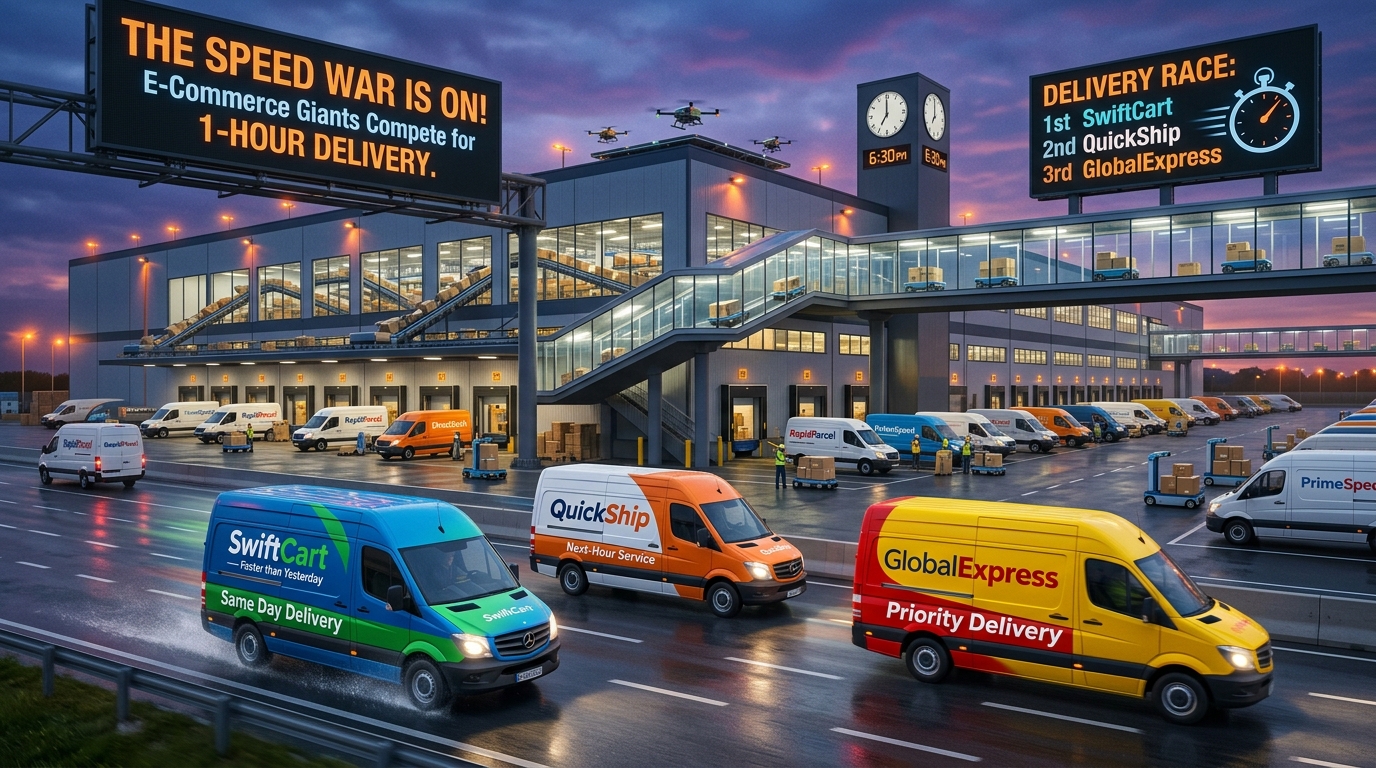
New digital competition in the e-commerce industry is pushing platforms to rethink how delivery systems operate. With rising customer expectations for faster shipping, companies are investing heavily in logistics innovation, automation, and regional expansion. This race for speed and efficiency is reshaping global online retail, making delivery performance a key factor in customer satisfaction and long term business success.
E-Commerce Delivery Race Dynamics
Market Competition Surge
E-commerce platforms are experiencing intense competition as companies race to deliver products faster to customers across regions. This pressure has forced businesses to upgrade logistics networks, improve delivery times, and invest in technology that enhances operational efficiency and customer satisfaction levels globally in modern markets
Logistics Pressure Growth
Rising customer expectations have increased logistics pressure on e-commerce platforms, pushing them to redesign supply chains and optimize delivery routes for speed. Companies now rely on data driven systems, automation, and strategic partnerships to maintain competitive advantage in fast evolving digital marketplaces worldwide online trade
Technology Driven Competition
Technology driven competition is reshaping how e-commerce platforms operate, with artificial intelligence, predictive analytics, and real time tracking systems improving delivery accuracy and speed. These innovations allow companies to respond faster to customer demands and streamline logistics processes efficiently across regions in global markets today
Customer Demand Impact
Customer demand for faster deliveries has significantly influenced e-commerce platforms, forcing them to redesign fulfillment strategies and invest in advanced logistics infrastructure. This shift has created a highly competitive environment where speed and reliability determine market success and customer loyalty across online ecosystems globally now
Competitive Delivery Standards
E-commerce platforms now compete by setting higher delivery standards, ensuring faster shipping times and improved customer service. These benchmarks encourage continuous innovation, pushing companies to adopt new technologies and streamline logistics for better performance and customer satisfaction in all regions in modern commerce systems globally
Logistics Innovation Strategies
AI Route Optimization
E-commerce platforms use AI powered route optimization to reduce delivery times and improve efficiency in logistics operations. By analyzing traffic patterns, weather conditions, and delivery locations, systems generate the fastest possible routes, helping companies compete effectively in fast paced online markets globally across regions today
Smart Warehouse Systems
Smart warehouse systems are transforming e-commerce logistics by automating inventory management, sorting processes, and packaging operations. These systems reduce human error, increase speed, and ensure accurate order fulfillment, allowing platforms to compete more effectively in fast growing digital markets supporting global online competition efficiency gains
Predictive Delivery Systems
Predictive delivery systems help e-commerce platforms forecast demand, allocate resources, and optimize shipping schedules. These systems use historical data and machine learning models to reduce delays and improve customer satisfaction in highly competitive online retail environments improving efficiency and global delivery performance today significantly enhanced
Automation in Logistics
Automation in logistics enables e-commerce platforms to speed up order processing, reduce operational costs, and increase accuracy in deliveries. Automated systems streamline workflows and improve scalability, helping companies handle growing demand across multiple regions efficiently while improving global logistics competitiveness and efficiency levels continuously evolving
Real Time Tracking Tools
Real time tracking tools provide transparency in e-commerce deliveries, allowing customers to monitor shipments from dispatch to arrival. These tools enhance trust, improve communication, and help platforms maintain competitive advantage in fast moving online retail environments supporting better customer satisfaction and operational efficiency globally integrated
Same Day Delivery Expansion
Urban Delivery Growth
Urban areas are driving same day delivery growth as e-commerce platforms invest in localized warehouses and faster distribution networks. High population density and demand for instant shopping experiences encourage companies to build efficient systems that support rapid fulfillment and competitive advantage in cities worldwide now
Micro Fulfillment Centers
Micro fulfillment centers are small automated warehouses located near urban customers, enabling faster order processing and reduced delivery times. These centers help e-commerce platforms compete in same day delivery markets by improving efficiency and lowering transportation costs significantly enhancing global retail logistics performance today growth
Rapid Dispatch Systems
Rapid dispatch systems enable e-commerce platforms to process orders immediately after purchase, reducing waiting times and improving customer satisfaction. These systems integrate automation and real time analytics to ensure faster fulfillment across regional delivery networks boosting efficiency and global same day delivery capabilities significantly improved
Local Courier Partnerships
Local courier partnerships allow e-commerce platforms to expand same day delivery services by leveraging existing regional networks. These collaborations reduce delivery times, improve reliability, and help businesses compete effectively in fast paced urban markets worldwide strengthening logistics efficiency and customer experience globally across online platforms
Demand Driven Fulfillment
Demand driven fulfillment systems help e-commerce platforms prioritize high demand products and allocate resources efficiently during peak periods. This approach ensures faster deliveries, reduced delays, and improved satisfaction for customers expecting same day service improving global delivery performance and operational efficiency systems significantly today fast
Warehouse Automation Technologies
Robotic Sorting Systems
Robotic sorting systems in warehouses help e-commerce platforms increase processing speed and accuracy by automating package classification and routing. These systems reduce labor dependency and ensure faster order fulfillment across large scale distribution centers efficiently improving global warehouse efficiency and operational performance systems continuously optimized
Automated Storage Systems
Automated storage systems organize inventory efficiently using robotics and AI driven processes. They reduce retrieval time, improve space utilization, and support faster fulfillment operations in competitive e-commerce environments globally enhancing logistics scalability and efficiency in modern digital commerce platforms worldwide driving continuous innovation growth today
AI Inventory Management
AI inventory management helps e-commerce platforms predict stock levels and automate replenishment processes. It reduces overstocking and shortages, ensuring smooth operations and faster delivery performance across regional markets improving supply chain efficiency and global logistics performance systems across industries enhanced automation and analytics tools globally today
Smart Packaging Solutions
Smart packaging solutions use technology to optimize packaging size, reduce waste, and improve delivery efficiency for e-commerce platforms. These systems enhance sustainability and support faster shipping across global markets boosting logistics efficiency and reducing environmental impact in modern supply chains worldwide sustainable growth models today
Fulfillment Center Networks
Fulfillment center networks connect multiple warehouses to streamline order processing and improve delivery speed for e-commerce platforms. They enable faster regional distribution and enhance customer satisfaction through efficient logistics coordination strengthening global supply chain efficiency and improving operational performance systems across regions today market growth
Last Mile Delivery Competition
Fast Delivery Race
Last mile delivery competition is driving e-commerce platforms to innovate faster shipping methods and improve efficiency. Companies are investing in local hubs, advanced tracking systems, and optimized routes to meet rising customer expectations for rapid order fulfillment globally enhancing global logistics performance today market competition
Local Network Expansion
Local network expansion helps e-commerce platforms reduce delivery times by building strong regional partnerships and distribution centers. This strategy improves efficiency, lowers costs, and enhances customer satisfaction across competitive online markets supporting global supply chain efficiency and regional logistics growth systems enhanced delivery performance globally
Crowdsourced Delivery Models
Crowdsourced delivery models allow e-commerce platforms to use independent drivers for faster last mile delivery. This approach increases flexibility, reduces operational costs, and improves delivery speed in densely populated urban regions worldwide boosting global logistics efficiency and customer satisfaction systems across modern e-commerce platforms today
Delivery Time Optimization
Delivery time optimization focuses on reducing delays by improving route planning, warehouse coordination, and real time tracking systems. E-commerce platforms use advanced algorithms to ensure faster deliveries and maintain strong competitive advantage in online markets improving global logistics efficiency and delivery performance systems today optimized
Urban Fulfillment Pressure
Urban fulfillment pressure forces e-commerce platforms to adopt faster delivery strategies and invest in localized infrastructure. High demand in cities increases competition and pushes companies to innovate continuously in last mile logistics systems enhancing global delivery efficiency and competitive market performance systems across online platforms
Customer Experience Expectations
Faster Delivery Demands
Customer expectations for faster delivery are reshaping e-commerce strategies, forcing platforms to optimize logistics networks and invest in advanced technologies. This trend drives innovation and improves service quality across global online markets significantly boosting global logistics efficiency and customer satisfaction systems today market competition rise
Seamless Shopping Experience
Seamless shopping experience is becoming essential for e-commerce platforms competing in fast paced digital markets. Companies focus on improving interface design, checkout processes, and delivery transparency to increase customer satisfaction and loyalty globally enhancing global e-commerce efficiency and user engagement systems today across online platforms
Trust in Delivery Systems
Trust in delivery systems is crucial for e-commerce platforms as customers rely on accurate tracking and timely fulfillment. Strong logistics networks and transparent communication improve credibility and support long term customer relationships in global markets improving global logistics efficiency and trust systems today market stability
Personalized Recommendations
Personalized recommendations enhance customer experience by suggesting relevant products based on browsing history and preferences. E-commerce platforms use AI algorithms to increase engagement, improve conversions, and strengthen loyalty across digital markets boosting global customer satisfaction and e-commerce efficiency systems today worldwide driven digital transformation growth
Reliable Customer Support
Reliable customer support is essential for e-commerce platforms to resolve issues quickly and maintain satisfaction. AI chatbots and human assistance systems work together to provide timely responses and enhance overall user experience in competitive online markets improving global service efficiency and customer trust systems today
Future of Delivery Competition
Autonomous Delivery Systems
Autonomous delivery systems are transforming e-commerce logistics by using drones and self driving vehicles to complete orders faster. These innovations reduce human involvement, improve efficiency, and enhance delivery speed in competitive online markets boosting global logistics efficiency and autonomous delivery systems today rapidly emerging technology
AI Predictive Logistics
AI predictive logistics enables e-commerce platforms to forecast demand and optimize delivery routes using advanced machine learning algorithms. This improves efficiency, reduces costs, and enhances customer satisfaction across global online markets improving global logistics efficiency and AI driven delivery systems today worldwide future market growth
Hyperlocal Delivery Expansion
Hyperlocal delivery expansion focuses on bringing products closer to customers through localized warehouses and networks. This reduces delivery times, improves efficiency, and strengthens competition among e-commerce platforms in urban and regional markets enhancing global logistics efficiency and competitive delivery systems today across online platforms growth
Drone Delivery Integration
Drone delivery integration allows e-commerce platforms to deliver packages quickly and efficiently in urban areas. This technology reduces traffic delays, lowers costs, and improves last mile delivery performance across global markets boosting global logistics efficiency and drone technology adoption today rapidly future delivery systems evolution
Next Generation Logistics AI
Next generation logistics AI transforms e-commerce delivery systems by improving forecasting, route optimization, and real time decision making. These systems increase efficiency, reduce delays, and enhance customer satisfaction across global markets improving global logistics efficiency and AI powered delivery innovation systems today future readiness systems
FAQs
How do e-commerce platforms compete in delivery speed?
They invest in logistics technology, automation, and local networks.
What role does AI play in delivery services?
AI improves routing, forecasting, and delivery efficiency.
Why is last mile delivery important?
It determines final customer satisfaction and delivery speed.
How does automation improve logistics?
It reduces errors and speeds up order processing.
What is future trend in delivery systems?
Autonomous and drone-based delivery will dominate.
Conclusion
E-commerce platforms are rapidly competing to deliver faster services through advanced logistics systems, automation, and artificial intelligence. This competition is reshaping customer expectations and global retail standards. Companies continue investing in innovation, last mile solutions, and predictive technologies to improve efficiency, reduce costs, and ensure seamless delivery experiences across regional and international online markets for sustainable growth digital commerce future
